Clinical Characteristics
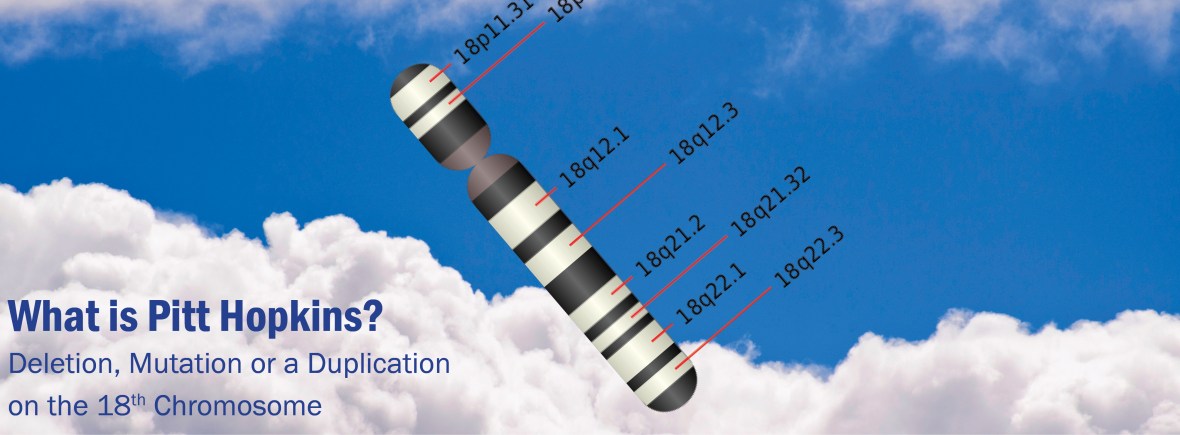
Pitt Hopkins Syndrome (PTHS) is a rare genetic disorder affecting a specific gene in chromosome 18, called TCF4. PTHS is characterized by developmental delay, possible breathing problems of episodic hyperventilation and/or breath-holding while awake (55%-60%), gastrointestinal issues, lack of speech, and distinctive facial features. Delayed milestones are reported in all, with hypotonia in most. Global developmental delays are significant and intellectual disability is moderate to severe; most affected individuals are nonverbal. Other common findings are behavioral issues, hand stereotypic movements, seizures/epilepsy (40%-50%), constipation, and severe myopia (nearsightedness). As we learn more about Pitt Hopkins, the developmental spectrum of the disorder is widening, and can also include difficulties with anxiety and ADHD, and sensory disorders.
Pitt Hopkins syndrome is considered an Autism Spectrum Disorder, and some individuals with Pitt Hopkins syndrome have been diagnosed with Autism, with ‘atypical’ autistic characteristics, and/or Sensory Integration Dysfunction.
Because of its genetic relationship to autism and other disorders, many researchers believe that curing Pitt Hopkins syndrome will lead to cures for similar disorders.
Relatively few older teens or adults have been reported with PTHS; thus it is not yet known what, if any, other adult-onset disorders may be of concern in PTHS.
It is Quite Rare
Overall prevalence of PTHS is unknown. However, one laboratory estimated that the frequency of chromosome 18q21 deletions and mutations associated with PTHS is between 1 in 34,000 and 1 in 41,000. An estimate from another researcher is 1 in 200,000-300,000. PTHS occurs in both males and females and is not limited to a specific ethnic background.
With continued research and awareness of Pitt Hopkins, we hope to build a more comprehensive understanding of the spectrum of this disorder, and begin the search for a desperately needed cure.
Discovery
PTHS was first described by D. Pitt and I. Hopkins in the Australian Pediatric Journal in 1978. The connection to TCF4 was not established until 2007 when it was found to play an essential role in the development of the nervous system and the brain. Any functional deficiency of TCF4 greatly affects how a child develops over time.
Articles
Definition and statistics from the National Institutes of Health Gene Reviews:
http://www.ncbi.nlm.nih.gov/books/NBK100240/
Dr. David Sweatt’s recent research article:
http://www.nature.com/emm/journal/v45/n5/full/emm201332a.html .
Source: Pitt Hopkins Research Foundation
 Alexandra's Pitt Crew